This text is part of the Weather Preparedness & Resilience Toolbox developed by the YOUROPE Event Safety (YES) Group within YOUROPE’s 3F project (Future-Fit Festivals). It is aimed at everyone involved in planning, building, and operating open-air events. It helps festivals and other outdoor events become truly weather-ready by offering both practical and research-based resources as well as background information on weather and climate. Learn how to design safer and more weather-resilient outdoor events.
Gathering On-Site Information: From Sensors to Crowd Perception
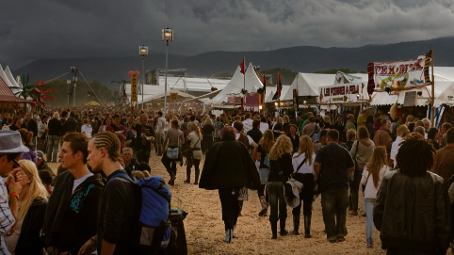
Effective weather risk management at events does not end with forecasts and warnings issued days or hours in advance. Once an event is underway, on-site information gathering becomes a decisive factor for situational awareness, operational control, and timely decision-making.
From technical measurements such as wind speed to qualitative feedback from staff and audiences, a wide spectrum of data sources is available directly on site—and all of them matter.
Objective Measurements: What Is Physically Happening?
Technical instruments provide the backbone of on-site weather monitoring. Typical examples include:
- Anemometers (wind meters) to measure mean wind speed and gusts at critical structures such as stages, towers, or temporary roofs
- Thermometers and heat index sensors to track air temperature, radiant heat, and humidity
- Rain gauges and surface water observations to identify ground saturation and drainage issues
- Lightning detection or proximity alerts, whether via professional systems or trusted external feeds
These measurements deliver objective, quantifiable data that can be compared against predefined thresholds, engineering specifications, and show-stop criteria. They are essential for defensible decisions, documentation, and post-event analysis.
However, objective data alone rarely tells the full story.
Subjective Information: How Conditions Are Experienced
Weather impacts are not experienced uniformly. The same temperature, wind speed, or rainfall can lead to very different effects depending on clothing, crowd density, physical exertion, alcohol consumption, and expectations. This is where subjective on-site information becomes critical.
Key examples include:
- Perceived temperature: Heat stress may occur well before formal temperature thresholds are reached, especially in dense crowds or unshaded areas
- Comfort and fatigue levels: Reports of dizziness, irritability, or exhaustion among visitors or staff
- Mood and behaviour: Weather can significantly influence crowd mood: heat may increase aggression or impatience, prolonged rain may lead to frustration, withdrawal, or sudden mass movements
- Compliance and cooperation: Audience willingness to follow instructions often changes under adverse weather conditions
These factors cannot be measured by sensors alone but have a direct operational relevance.
Staff Reports: Human Sensors on the Ground
Event staff like security personnel, stewards, medical teams, stage crews, and volunteers function as distributed human sensors across the site. Structured staff reporting can provide early indicators of emerging problems, such as:
- Heat-related symptoms in specific audience zones
- Slippery surfaces, pooling water, or reduced visibility
- Changes in crowd mood, impatience, or agitation
- Local wind effects or gusts not captured by a single fixed sensor
For this to work effectively, reporting pathways must be simple, clearly defined, and actively encouraged. Unstructured anecdotal feedback is less useful than concise, situation-focused observations linked to location and time.
Crowd Feedback: Listening to the Audience
In addition to staff observations, direct or indirect crowd feedback can provide valuable insights. This may include:
- Increased visits to water points or medical posts
- Social media posts indicating discomfort, frustration, or fear
- Verbal feedback to stewards or information points
While such feedback is inherently subjective, patterns and clusters can signal deteriorating conditions earlier than formal indicators.
Integrating Data: From Information to Action
The key challenge is not the lack of data, but integration and interpretation. On-site information gathering should therefore be:
- Multi-layered: combining technical measurements with human observations
- Continuous: not limited to isolated checks, but monitored throughout all event phases
- Context-aware: interpreted in relation to crowd density, programme highlights, time of day, and audience composition
Crucially, this information must feed into clear decision-making processes. If staff reports and crowd feedback consistently indicate stress or deteriorating mood even while sensor data remains “within limits” this may still justify preventive measures such as programme adjustments, communication interventions, or operational slow-downs.
Conclusion
Gathering on-site information is far more than reading numbers from a display. It is about building a situational picture that combines objective measurements with human experience. Weather risk at events emerges not only from wind speeds, temperatures, or rainfall totals, but from how people perceive, endure, and react to these conditions.
A professional approach to on-site information gathering recognises both dimensions—and treats sensors, staff, and crowds as equally important sources of insight for safe and resilient event operations.