This text is part of the Weather Preparedness & Resilience Toolbox developed by the YOUROPE Event Safety (YES) Group within YOUROPE’s 3F project (Future-Fit Festivals). It is aimed at everyone involved in planning, building, and operating open-air events. It helps festivals and other outdoor events become truly weather-ready by offering both practical and research-based resources as well as background information on weather and climate. Learn how to design safer and more weather-resilient outdoor events.
Heatwave / Heat exposure
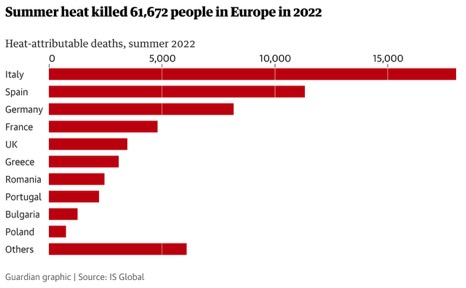
Summary: Recent European heatwaves have caused large increases in heat-related illness and deaths (studies and briefs show thousands to tens of thousands of excess deaths in summers such as 2003, 2019 and more recent events). These events disrupted outdoor gatherings and required health system responses. Source: The Guardian
Examples:
- March, 2024: Pitch Music & Art Festival officially cancelled the event on the advice of Victoria’s Country Fire Authority, a call prompted by extreme fire danger at the site near the Grampians National Park in western Victoria. Five revellers have been taken to hospital from events around Victoria with one in a critical condition. 7News
- Y Not Festival, England, 2019 – participants water shortage. Source: The festivals.uk
- Boomtown and Bloodstock, England, 2022 – cancelled due to heatwave. Source: Derby Telegraph, Daily Mail
ImageSource: The Guardian
World media coverage worth mentioning:
- Australia, 2019: Falls Festival in Lorne has been cancelled due to extreme heat, increased pressure to cancel its New Year’s Eve fireworks in Sydney as heatwave brings extreme bushfire risk conditions. The Guardian.com
- Rio de Janeiro, Brazil, 2024 – the heat index (a combination of temperature and humidity) hit 58.5°C (137°F), the highest index ever recorded there. Source: AP News Brazil. Taylor Swift case – a 23-year-old fan tragically died from heat exhaustion at a Taylor Swift concert in Rio de Janeiro in November 2023, forensics report determined cause of death to be cardiac arrest caused by heat exhaustion, with no preexisting conditions or substance abuse. Concert-goers said they were not allowed to bring water bottles into the stadium even though Rio and most of Brazil have had record-breaking temperatures that week amid a dangerous and lasting heat wave. Source: LA Times, BBC, Fox News, local news
- Kesen Rock Festival, Japan, 2025 – held amid extreme heat. Japan News

Image source: Fox News
What went wrong at events: Insufficient cooling/hydration infrastructure, inadequate medical staffing for heat illness surges, lack of shade and poor messaging to attendees (hydration, rest). Some events underestimated the duration/intensity and failed to escalate hydration/rest breaks or medical resource deployment. World Health Organization, WHO Health Guidance
Practical takeaway:
- Embed a Heat-Health Action Plan (HHAP) into event plans: trigger levels, extra medical staffing, hydration stations, shaded rest areas, adjusted schedules (cooler hours). WHO/EuroHEATguidance gives the structure to follow. World Health Organization publications
- Use locally-relevant thresholds (city heat indices, regionally calibrated) rather than one-size-fits-all temperature numbers. WHO Health Guidance
Other incidents
- European summer festivals (e.g. Hellfest, Resurrection Fest), 2022–2024 – Temperatures frequently approached or exceeded 40 °C, causing heat stress among attendees and prompting organisers to introduce additional shade, water provision and medical resources, though many fans still reported inadequate adaptation. https://www.iqmagazine.com/2025/07/european-festivals-extreme-weather/
- Ed Sheeran concert, Pittsburgh, USA, 2023 – At least 17 fans were hospitalised with heat‑related illness during a hot, humid show, highlighting the need for heat‑specific crowd care and communication. https://www.context.news/climate-risks/too-hot-to-party-extreme-temperatures-threaten-live-music-shows
- Multiple European events, 2023–2024 – Context reporting on Europe’s record‑breaking summers notes that outdoor concerts and festivals took place during major heatwaves linked to thousands of regional heat‑related deaths, even when individual events did not report mass casualties, underscoring systemic heat risk for live music. More than 62,000 people died in Europe’s 2024 heatwave: Which country was hit the hardest? | Euronews
| Date | Event | Country | City / Site | Hazard Detail | Phase | Impact Type | Fatalities | Injuries | Operational Outcome | Notes |
| 2019-12-28 | Falls Festival | Australia | Lorne | Extreme heat, bushfire risk | Pre-event | Heat / fire danger | 0 | n/a | Festival cancelled | Authority-driven cancellation |
| 2023-11-17 | Taylor Swift – Eras Tour | Brazil | Rio de Janeiro | Extreme heat | Live | Heat exhaustion | 1 | >100 | Show postponed | Water access criticised |
| 2024-03-10 | Pitch Music & Arts | Australia | Victoria | Extreme heat, fire danger | Live | Heat stress | 1* | >20 | Festival cancelled | Fatality reported |
| 2025-06-XX | Multiple EU festivals | Europe | Various | Heatwaves | Live | Medical surge | 0 | many | Schedule adaptations | Pattern recognition entry |