This text is part of the Weather Preparedness & Resilience Toolbox developed by the YOUROPE Event Safety (YES) Group within YOUROPE’s 3F project (Future-Fit Festivals). It is aimed at everyone involved in planning, building, and operating open-air events. It helps festivals and other outdoor events become truly weather-ready by offering both practical and research-based resources as well as background information on weather and climate. Learn how to design safer and more weather-resilient outdoor events.
Flooding
1) Ahr Valley / Western Germany floods (July 2021)
Summary: Extreme convective rainfall produced catastrophic flash-flooding in the Ahr Valley (July 2021); hundreds killed locally and towns were devastated. The event overwhelmed local warning and evacuation responses in many places. ResearchGate
What went wrong: Rapid onset of floods in narrow valleys, combined with insufficiently effective warning/evacuation at the local level and infrastructure vulnerabilities (roads/bridges), meant people and events were caught with little time to move. Local event planners often lacked scenario-based evacuation routes for flash floods. NHESS
Toolbox takeaway:
- For riverine/flash-flood risk sites: predefine escape routes uphill/away from run-off channels, identify multiple shelter alternatives, and set automatic triggers tied to local river gauge thresholds and rain-rate nowcasts (not just 24-hour forecasts). ResearchGate
2) Storm Alex / SE France / NW Italy flash floods (Oct 2020)
Summary: Storm Alex produced exceptional convective rainfall and flash flooding in mountainous and coastal areas (e.g. Vallées). Flash floods and landslides cut roads and trapped people; rapid emergency response required search/rescue. Copernicus Climate Change Service
What went wrong: Orographic enhancement and steep terrain turned moderate forecast rainfall into extremely hazardous local flash floods. Event logistics and access were quickly lost. Copernicus Climate Change Service
Toolbox takeaway:
- In steep terrain or urban-drainage-constrained sites, use flash-flood guidance, local radar nowcasts and set lower thresholds for cancellation/evacuation. Drill the “move uphill / move to upper floors” plan with event staff.
3) Other urban/coastal flooding (examples across Europe)
What happened / lessons: Coastal surge and pluvial flooding (e.g. Venice high tides, Iberia flash-flooding) regularly interrupt events; key failure modes are underestimating local drainage limits and late communication of venue closures. Wikipedia
Toolbox takeaway: Map site drainage and lowest-point assets; preposition pumps/sandbags; prepare PA scripts for urgent evacuation; coordinate with local flood forecasting services. Copernicus Climate Change Service
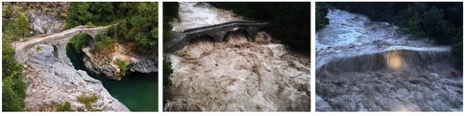
Image: The Roman bridge over the river Roya near the village of Fanghetto in Liguria was submerged and collapsed by the flood wave produced by the rains of early October. Data source: Fanghetto Reporter[3]. Credit: Fanghetto reporter, quoted by Copernicus Climate Change Service
Mud & Mudslide
(Rain-induced Rapid Mass Movement)
In Europe, heavy rain events can cause sudden and destructive mudslides, like the 2009 Messina floods and mudslides in Sicily, where extremely intense rain over a short period generated fast-moving mud that overwhelmed infrastructure and trapped people, forcing evacuations and emergency declarations. (Source: Wikipedia) Some festivals are well-known for mud conditions, mud at Electric Castle is often part of the festival lore, in most editions attendees embraced it, but from an operational perspective it can:
- Stress logistics & access infrastructure
- Increase medical/first-aid demand (slips, longer walking distances)
- Create bottlenecks at ingress/egress points, Crowd Movement Issues -mud increases fatigue, trip/slip risk, and can slow evacuation/medical access
- Disrupt scheduled programming if conditions worsen
- ELECTRIC CASTLE Festival (Romania)
Summary: Heavy rain and mud have been a recurring issue at Electric Castle in multiple years, particularly noted during intense rainfall events that lasted many hours. At the 2015 edition, heavy, continuous rain over ~36 hours turned parking, camping, and festival paths into muddy pools, leading the organisers to import 30+ tons of gravel/stone and straw balesto try to keep access routes navigable. HotNews.ro
The mud was so extensive that many participants purchased rubber boots and ponchos locally, and in some areas hundreds of tents and large open areas were affected by flooding and mud. Mediafax
In 2025, heavy rains again caused significant mud impacts, including dozens of vehicles getting stuck in parking fieldsand extended delays for participants trying to exit the site due to mud-blocked access roads. Radio Impuls
Despite the mud, crowds often continued to attend concerts and camp, and some attendees even embraced the situation, dancing in the mud. MonitorulCluj
Key operational points:
The mud was not just cosmetic: parking and access logistics were severely disrupted, slowing movement in/out of festival areas. Radio Impuls
Organisers had to bring heavy materials (gravel, stone, straw) and vacuum trucks to drain areas with standing water and attempt to improve ground conditions. HotNews.ro
Prolonged, intense precipitation over a relatively flat, grass/soil site, where high attendance means compacting and churning up ground surfaces and limited natural drainage due to soil saturation are key elements to a muddy event. Temporary car parks and camping zones offer very little engineered drainage unless specifically designed for it.
Impact on Participant Experience
Electric Castle is a great real‑world example of how even a normal summer rain event can generate significant mud risks at large festival sites, affecting parking, access, and crowd movement. The key to resilience is proactive monitoring, early surface protection deployment, and clear attendee communication about hazards, routes, and expectations.
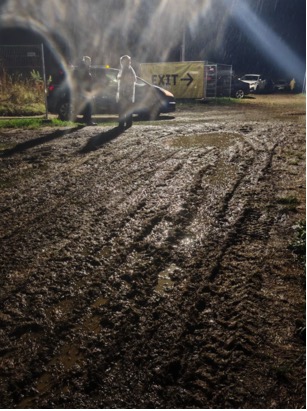
Image: parking area immediately after a heavy rain at Electric Castle Festival, source: Radio Impuls
Other Incidents (Flooding)
- Multiple Canadian music festivals, 2010s–early 2020s: Torrential rain and intense thunderstorms repeatedly led to mass evacuations, shortened programmes and, in some cases, site closures at events such as Osheaga and other large outdoor festivals. https://www.cbc.ca/news/trending/music-festival-extreme-weather-1.3622428
- Bonnaroo and other US festivals, 2020s: Prolonged heavy rain and saturated ground led to cancellation of entire festival days and severe access problems, with organisers citing “significant and steady precipitation” that exceeded forecast expectations. https://www.rollingstone.com/music/music-features/climate-change-summer-tour-festival-impact-1235421094/
- Elton John, Auckland concert, New Zealand, 2023: Record daily rainfall (over a summer’s average in one day) flooded parts of the city and venue, leading authorities to cancel the show shortly before start time on safety grounds. https://www.foxweather.com/lifestyle/10-concerts-mother-nature-unwanted-cameo-2023-severe-weather
Other Incidents (Heavy Rain & Mud)
| Date | Event | Country | City/Site | Hazard Detail | Phase | Impact Type | Fatalities | Injuries | Operational Outcome | Notes |
|---|---|---|---|---|---|---|---|---|---|---|
| 2015-09-25 | TomorrowWorld | USA | Georgia | Persistent heavy rain | Live | Ground & access failure | 0 | n/a | Day cancelled | Attendees stranded overnight |
| 2023-08-02 | Wacken Open Air | Germany | Wacken | Prolonged rainfall | Build-up / Live | Mud, access collapse | 0 | n/a | Admission stop | Capacity severely limited |
| 2023-09-01 | Burning Man | USA | Nevada desert | Heavy rain, flooding | Live | Site isolation | 1* | n/a | Shelter-in-place | Roads impassable for days |