
About Europe: Pavla Slívová
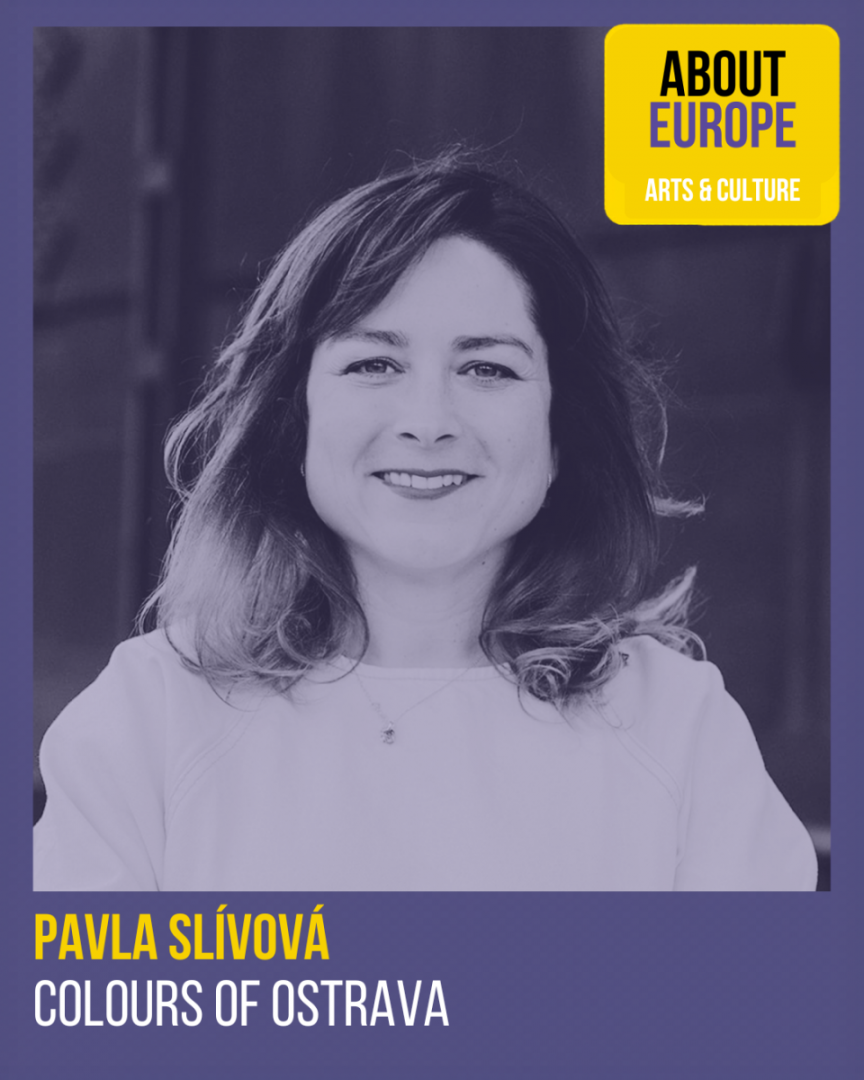
This text by YOUROPE’s board member Pavla Slívová is part of the project About Europe, in which YOUROPE and our sister network European Festivals Association (EFA) invite the cultural sector to engage in a public conversation about the evolution of Europe – as a continent, as a political entity, as a voice in the world and as a cultural society. Find all YOUROPE contributions to About Europe here.
As someone working in the festival world in Central and Eastern Europe, I often think about Europe not as a political project, but as a living ecosystem of people, cultures, languages and ideas.
One of Europe’s greatest strengths is its diversity. We speak different languages, have different histories, traditions and experiences. We do not always agree. Yet despite our differences, we share something larger than ourselves. We are Europeans.
I believe this diversity is not a weakness that needs to be managed; it is our greatest asset. Just as biodiversity strengthens nature, cultural diversity strengthens Europe. The richness of our continent comes from the fact that a festival in Portugal looks different from a festival in Finland, that an artist from Ukraine brings a different perspective than an artist from Spain, and that audiences in Ostrava, Athens or Dublin experience culture through their own unique lens. Europe would be poorer if we all looked, sounded and thought the same.
This is why culture matters. Festivals create spaces where people can experience this diversity directly. They allow us to step outside our own reality and encounter other stories, identities and perspectives. In times when public debate is increasingly polarized and dominated by simple answers, culture reminds us that complexity is not something to fear. It is something to celebrate.
Living and working in Central and Eastern Europe also means understanding how fragile some of our achievements can be. Many of us remember societies that were less open, less connected and less free. The war in Ukraine has painfully reminded us that peace, democracy and freedom cannot be taken for granted. During my visit to Ukraine, I met artists, cultural workers and ordinary citizens who continue to create, organize and dream despite the reality surrounding them. Their determination showed me that culture is not an extra. It is part of what keeps communities resilient and connected.
At the same time, Europe faces other challenges. We see growing social divisions, increasing loneliness, pressure on democratic institutions and the concentration of power in many sectors, including culture and live music. As we discuss Europe’s future, we should remember that diversity is not only about artists, audiences or nationalities. It is also about preserving a diverse cultural ecosystem. Independent festivals, local venues, grassroots initiatives and community-led projects are essential. Cultural diversity depends, in part, on diversity of ownership, diversity of voices and diversity of opportunities.
For more than twenty years, Colours of Ostrava has welcomed artists and audiences from across Europe and beyond. Every summer, I see thousands of people discovering unfamiliar cultures, listening to new languages and finding common ground through music, debate and shared experiences. In those moments, Europe becomes tangible. Not as an institution, but as a community.
The Europe I believe in is open, democratic, curious and compassionate. A Europe that is proud of its differences and understands that our diversity is the source of our strength. We may come from different countries, speak different languages and carry different histories, but together we create something larger, richer and more resilient than any of us could build alone.

Disclaimer:
Co-funded by the European Union. Views and opinions expressed are however those of the author(s) only and do not necessarily reflect those of the European Union or the European Education and Culture Executive Agency (EACEA). Neither the European Union nor the granting authority can be held responsible for them.