This text is part of the Weather Preparedness & Resilience Toolbox developed by the YOUROPE Event Safety (YES) Group within YOUROPE’s 3F project (Future-Fit Festivals). It is aimed at everyone involved in planning, building, and operating open-air events. It helps festivals and other outdoor events become truly weather-ready by offering both practical and research-based resources as well as background information on weather and climate. Learn how to design safer and more weather-resilient outdoor events.
The Use of Role Cards and Action Cards
Role and Action Cards are the crip sheets among all tools. It‘s just good to have them .
Role cards and action cards help to deliver concrete information with limited resources. They come in all shapes and sizes, mostly being a A6 card.
They can be related to a
- person
- role
- position or
- specific reaction.
In regard to the content, they can aim at reducing cognitive load under stress: in critical situations, people tend to fall back to what is simple, familiar and immediately accessible – not necessarily what is planned for this special situation. Role cards and action cards externalise knowledge that would otherwise have to be recalled under stress. By presenting responsibilities, priorities and necessary actions in a concise, structured format, they reduce cognitive load and prevent decision paralysis.
Plans, matrices, and flowcharts are essential but in a live situation, they are often too complex to navigate.
Role cards and action cards act as the last operational layer, bridging planning and real-time execution. They ensure that well-designed procedures actually translate into effective action on site.
Role Cards
Many incidents escalate not because of wrong decisions, but because of unclear authority and parallel action. Role cards make the command chain visible and tangible. They define:
- who decides,
- who communicates,
- who monitors,
- who executes,
- and who documents.
This clarity is particularly important in multi-stakeholder environments where production, security, technical teams, artists, and authorities interact. Role cards prevent informal power shifts and ensure that decisions are taken and executed at the appropriate level.
General Design Principles
Format
- mostly pocket size (A7 or folded A6)
Visual Coding
- One role = one color (consistent across matrices, flowcharts, dashboards)
- Large role title + verb (DECIDE, COMMUNICATE, etc.)
- Icon + color band for instant recognition
Operational Constraints
- Each card answers three questions only:
- What decisions/actions am I responsible for?
- What information do I need?
- Who do I interact with?
Stress-proof language
- Short verbs
- No conditional prose
- No explanations, only actions
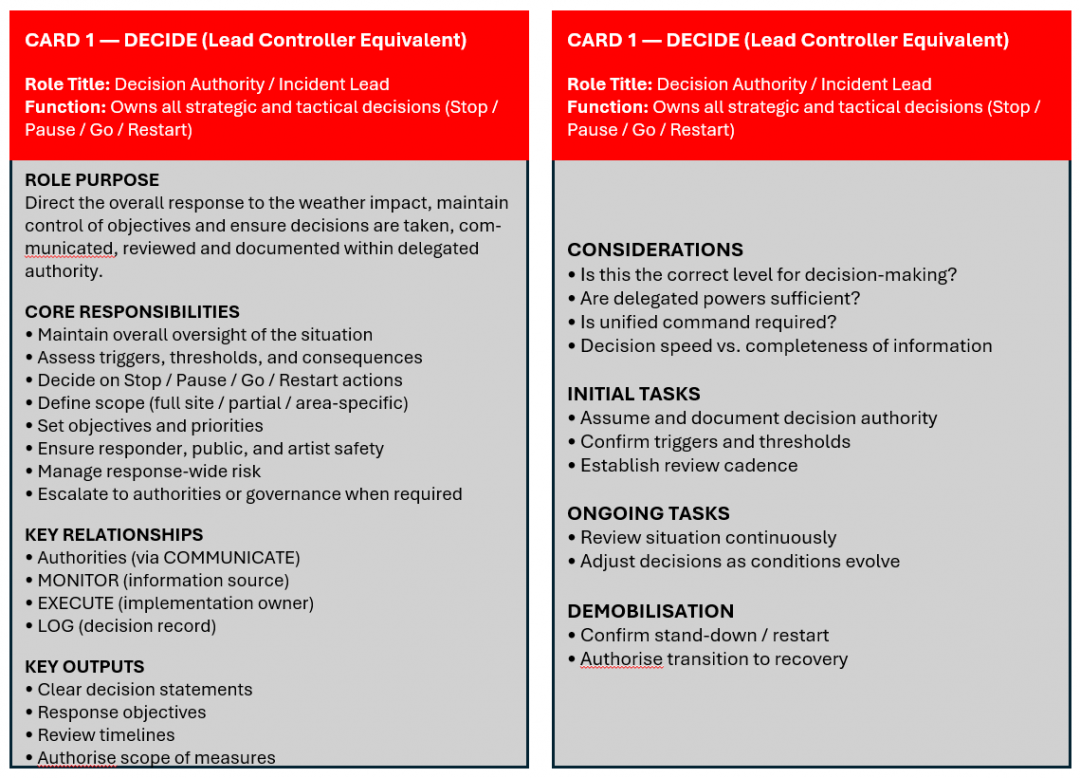
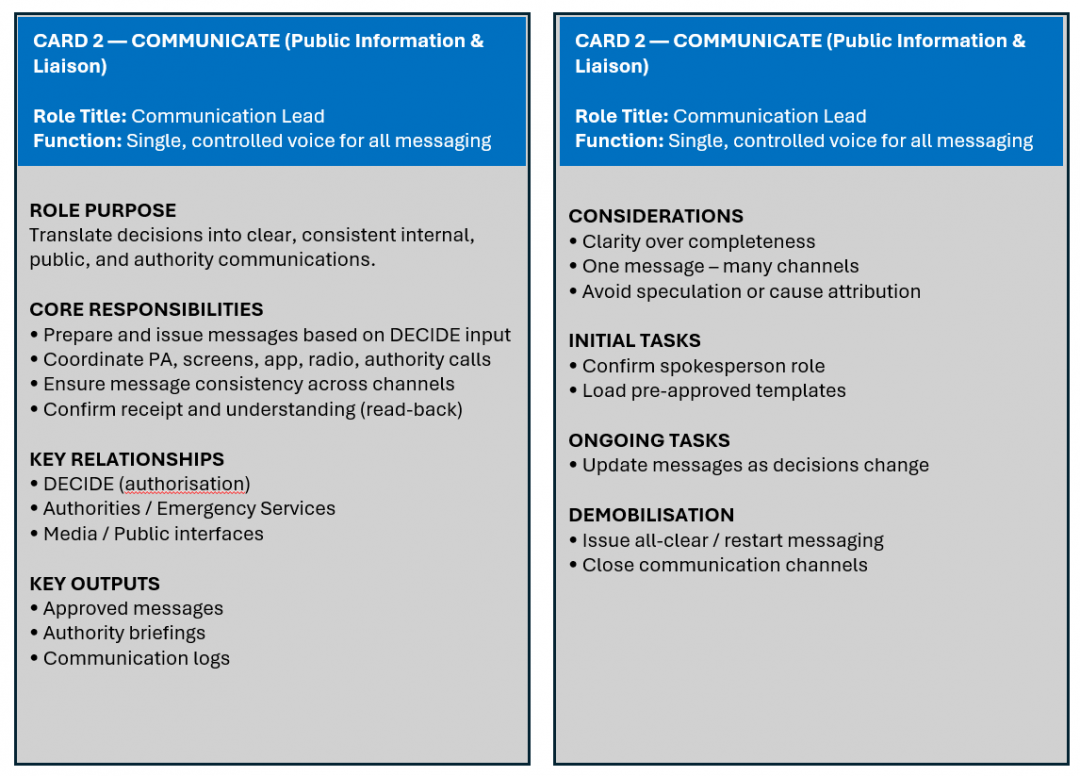
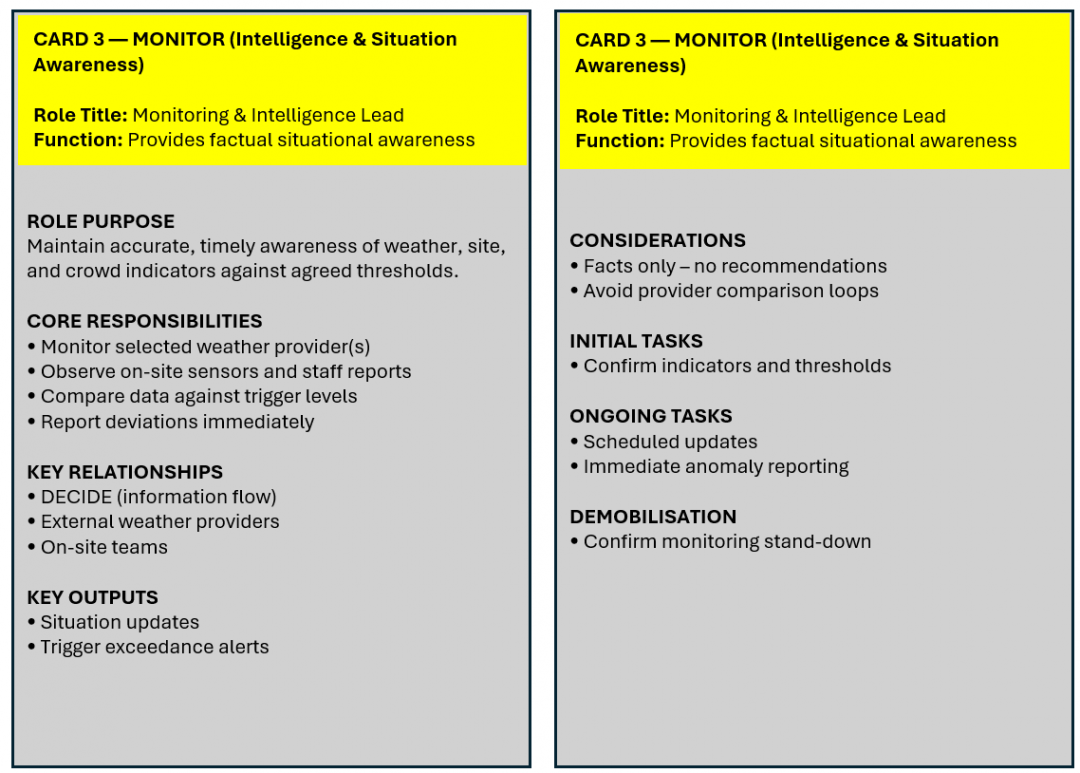
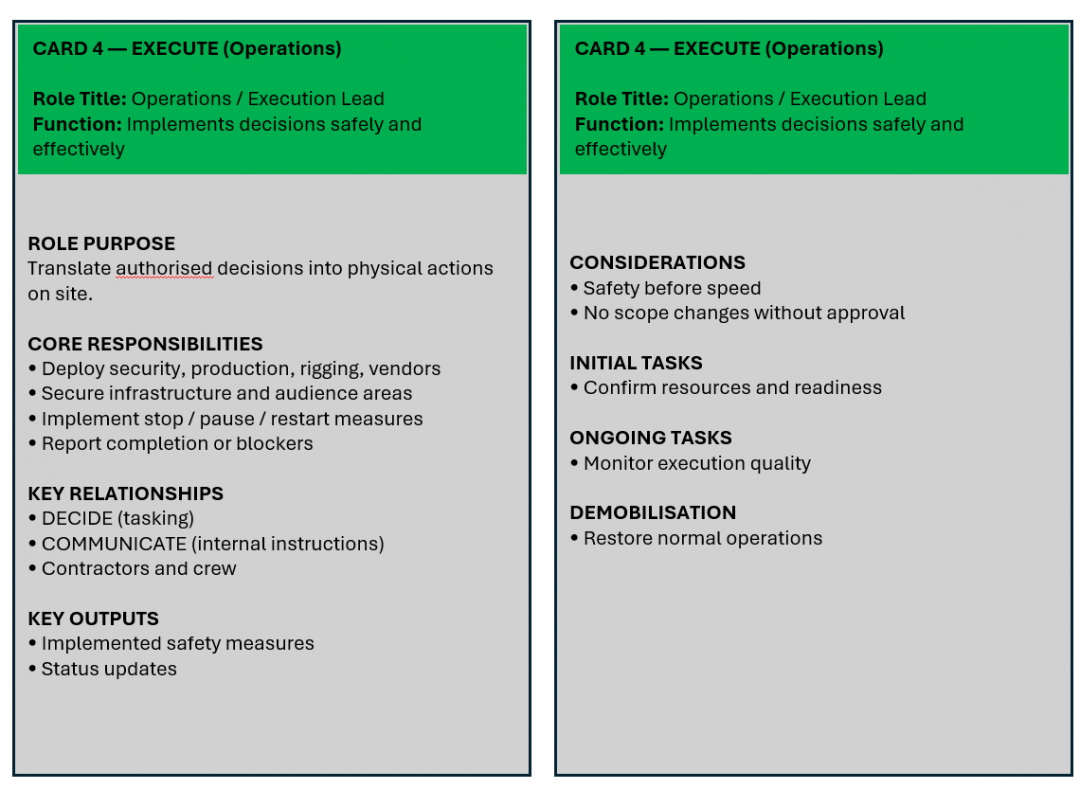
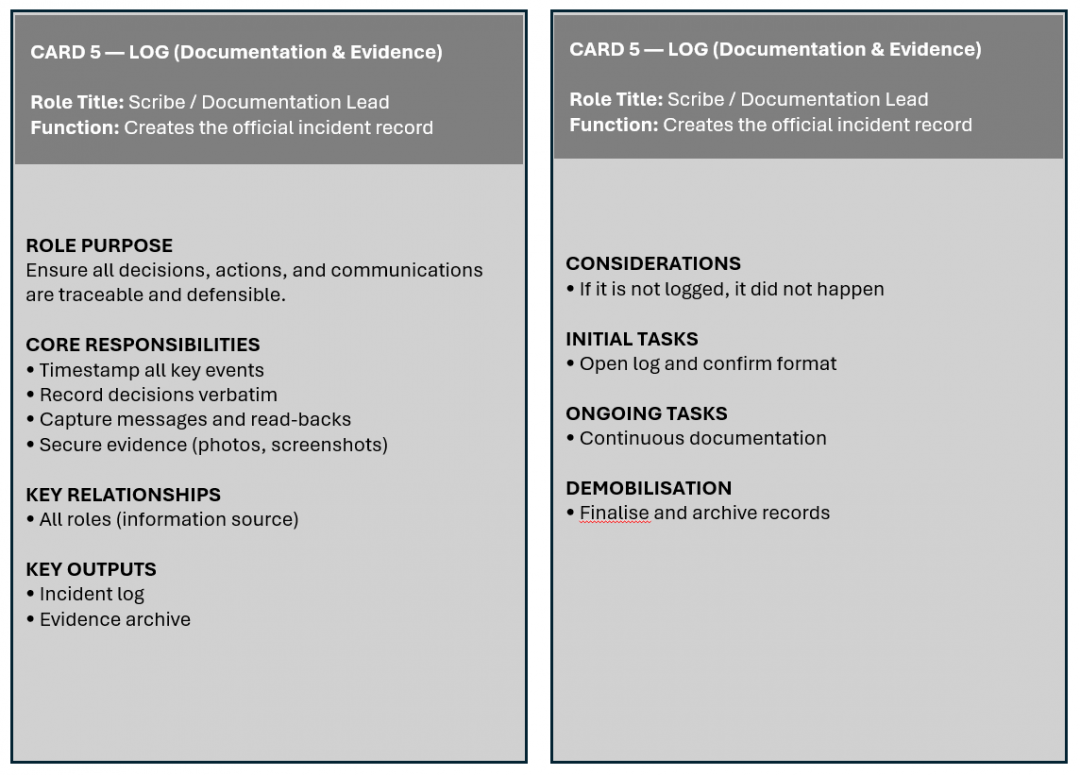
One example for role-cards can be found in the context of Coordinated Incident Management Systems (CIMS) here
Those command-role cards support a clear distinction between:
- information ownership (MONITOR),
- decision ownership (DECIDE),
- message ownership (COMMUNICATE),
- action ownership (EXECUTE),
- record ownership (LOG)
ANMERKUNG: ALLE KARTEN SIND ALS SEPARATES PDF BEIGEFÜGT
Action cards
Action cards can for example be set up as checklists – for individual phenomena or for general measures.
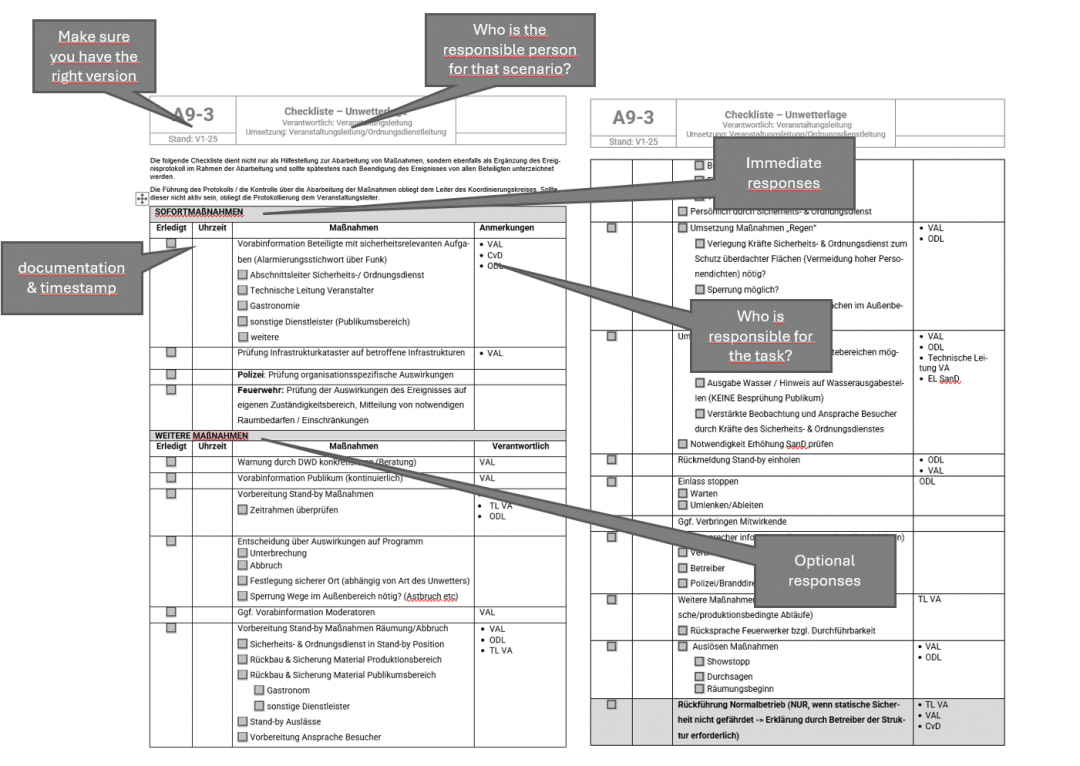
They can be printed as a hand-out (link einfügen zum Dokument? ) and can be used digitally as well.
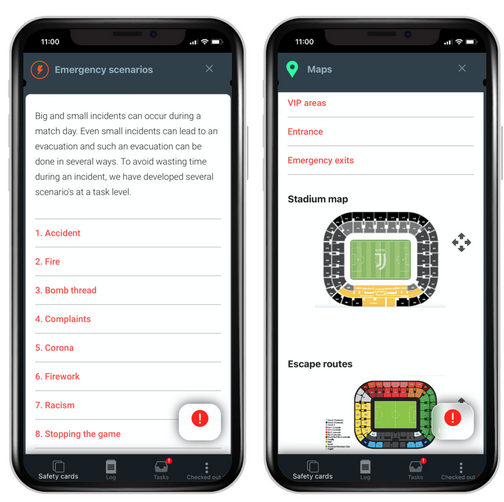
Photo: safesight/IBIT GmbH
Regardless, which type of card you chose : creating READABLE and USABLE role cards (characters in 4point size or prose texts are neither readable nor useful) and action cards forces you to think about and identify the most relevant key aspects in regard to your planning and your procedures.